Tuesday, April 12, 2011

BP Communication - Part 2

An update to the previous post, showing BP's communications to the press from October 2010 to April 2011 through the use of a tag cloud generator. It's interesting to notice the new most used words (the analysis covers 38 press releases) and the words that have disappeared from the cloud, more specifically:

- Committment
- Effort
- Incident
- Payments
- Relief


created at TagCrowd.com


Monday, September 6, 2010

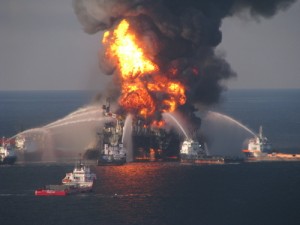
BP - Communicating the oil spill in the Gulf


It has been defined as the worst environmental catastrophe that has ever occurred to the USA, but I would extend the definition to the World, as pollutants don't respect geographical boundaries and tend to be very "democratic", affecting everybody equally.

I have decided to quantitatively analyze BP's communications to the press (up to September 4th), by creating tag clouds that reveal the main words used and the frequency in which they were used.

BP has published a total of 115 press releases throughout the months of the crisis, at an average frequency of 0.79 per day.

For today, the first in a series of posts relating to this disaster, let's have a look at the tag cloud created with all the text of the 115 press releases:


created at TagCrowd.com


Sunday, April 4, 2010

Coca Cola's questionable ad campaign


Now it will really look like I'm obsessed with Coca Cola. I'm not. But this ad campaign really struck my mind for the message it sends. The campaign I'm talking about is centered around the slogan "New twin pack. Enough for your meal". Obesity has been a big issue in the US for a while and sugared soft drink consumption has been proven to contribute to it. Diabetes goes hand in hand with it. Don't get me wrong, I drink coke every once in a while and there's nothing wrong with that. Reality is that the main drink to have with your meal should be water. The claim made in the ad is plain irresponsible. The average household size in the US is just above 2.5 people (OECD data from July 2009). Does Coca Cola really expect 2 or 3 people to consume 100oz of coke every meal? The Coke Classic's serving size is set at 8oz, according to the corporate website. 100oz of coke then is enough for 12 people. The right amount for your party, not for your meal.

Saturday, February 27, 2010

Coca Cola 2008 Annual Review - A qualitative analysis


  • It's clear from the first page that the company's performance was very stable as the report announces growth in cases sold, operating income, net operating revenues and operating cash flow.


  • The Chairman Isdell Neville opens the report. After some due economical considerations he expresses his wish to bring sustainability into Coca Cola, mentioning water stewardship, sustainable packaging, energy use and climate protection (pg 5)


  • It is then the turn of the CEO Muhtar Kent, who reassures the shareholders about the company's goals:
"The true power and resilience of our business was reflected in our ability to meet or exceed our long‑term growth targets for the third year in a row and add a billion incremental unit cases in volume—the equivalent to adding a market the size of Japan" (pg 6)

Kent underlines the minimization of the printing of the report which saved the company about $1 million.


  • The 2008 company's highlights include the Diet Coke Red Dress program, which put "messaging about heart health on 2.5 billion packages of Diet Coke and Caffeine-Free Diet Coke® products throughout the United States".

The section includes the following commitment:

"Set new global targets to improve water efficiency and reduce carbon emissions within our systemwide operations. Our goals are to improve our systemwide water efficiency 20 percent by 2012 and to grow our business but not our systemwide carbon footprint, reducing our emissions in developed countries by 5 percent by 2015. Both goals will be compared to a 2004 baseline"

  • The report continues offering a view of the future strategies


"Estimates show that over the next 12 years the worldwide population will grow by more than 800 million people. In addition, 1 billion new people will have entered the middle class, and nearly 900 million people will have migrated to urban centers. That means more consumers with more money, who have the ability to purchase more ready‑to‑drink beverages"


  • The report includes a section titled "Live Positive" (pg.27-28).


The Coca-Cola Company states its commitment to adopt sustainable business practices regarding the safeguarding of the environment and support to communities. The report mentions that since the adoption of the "Workplace Rights Policy" launched in 2007, more than 175 assessments and training sessions worldwide have been conducted.


Most of the sustainability claims are related to the environment but there is no mention, for example, of which standards the Coca-Cola Company will adopt in selecting new partners.


Despite the fact that I'm pleased to see a growing concern for communicating sustainability practices to the shareholders, I have to say that I'm concerned about the lack of homogeneity between growth considerations and sustainability claims. The latter seem to be relegated to merely accessory sticky notes. This disembodiment contradicts the vision of CSR as a philosophy that needs to guide every aspect of a company's operations.

Monday, November 9, 2009

Where profit meets responsibility


Browsing the internet I found News Spectrum. This online tool

"is a visualization of the words used for two topics in the latest results from Google News. One topic is coloured blue, the other red, and the associated words are coloured and positioned based on how highly they are associated with the two topics".

The two topics I selected were profit and social responsibility and here are the results:


Now, a few interesting considerations:
1. No specific companies stand out
2. Some expected words frequently associated with profit: company, bank, finance, business
3. Some expected words frequently associated with social responsibility: environment, society, health, security
4. Some unexpected words frequently associated with profit: church, art
5. Some unexpected words frequently associated with social responsibility: election, president

Let's now analyze the central area that should give us interesting insights on the common ground between the two topics:

community,
information,
green,
education, children,
state, government, public, country,
corporate, economic, law, investment, fund, innovation
rural,
charity

The outcome is interesting even though it is difficult to make a qualitative analysis of the result of a basic automated operation of word counting. We can use this result as the starting point for a couple of interesting considerations.

1. As suggested from the picture, the key to a constructive conjugation of profit and social responsibility involves the younger generations and is to be achieved through their education.
2. Governments still have a key role in regulating the operations and the information disclosed by companies operating on their territories
3. Innovation of processes and of business models can contribute in bringing the two worlds of profit and resonsibility closer than they have ever been.

Thursday, October 15, 2009

Sustainability Review VS Annual Review

Most of the biggest companies out there have decided to compile (and print) a sustainability report. While I'm against printing thousands of copies of a report that is easily accessible as an electronic document I am still glad these companies have decided to talk their walk. There's something I've been asking myself - if these companies are concerned about the impact of their operations at the point that they find vital to write a sustainability report, a strong trace of this attitude could be surely retrieved in their annual review. That's why I decided to make a little quantitative analysis (it's really not scientifically reliable, but i thought it could help me understanding) of the words used in both the reports. This analysis will be followed shortly by a qualitative one.

A quantitative analysis

Sustainability Review (65 pages, 49 pictures)

water 189
business 149
community 160
sustainability 159
environment + environmental 113
bottling 104
partners 87
packaging 81
health 58
recycling 57
education 53


Annual Review (50 pages, 53 pictures)

markets 111
growth 91
business 87
bottling 55
sustainability 50
partners 35
water 23


Sunday, August 30, 2009

EU Ban of 100W Incandescent Bulbs

From today, the 1st of September, the EU will start the phase-out process of 100W incandescent bulbs. The journey will continue in 2011 when 60W bulbs will be phased out and in 2012, when it will be the turn of 40W and 25W bulbs.


This is very good news considering that the efficiency of the new generations of bulbs has progressively increased. Compact Fluorescent Lamps (CFL) use between 65% and 80% less energy for the same light output compared to incandescent bulbs.


The main concern that has been raised is the presence of small amounts of mercury in the more efficient and promoted CFLs. Now, who really knows how to dispose of mercury? Where did you put your old broken thermometer?


I've done some quick internet research and found out that in the UK for example the lamps should be taken to the closest


Civic Amenity site (Household Waste Recycling Centre). These sites are provided for householders [...] Access is limited and controlled by the relevant Local Government body and if you are a business you should contact their Waste Management Unit to check if it would be possible to use their CA site facility.


As mentioned in one of my previous posts, the disposal of such commonly used items (including batteries) should be easy and convenient, otherwise people will just throw the occasional lightbulb in their general waste.


Some also raised the question of affordability; the new fluorescent bulbs are priced at significantly higher rates, but the increase in efficiency and durability should easily cover the price gap.


Patiently waiting for LEDs (light-emitting diodes) to get cheaper...


Friday, July 10, 2009

Transparency International - Global Corruption Barometer


On the 3rd of June 2009 Transparency International launched their "Global Corruption Barometer". It exposes the findings of a public opinion survey which involved 73,132 people in 69 countries. The study focuses on the general public's perception of corruption and gathers opinions on institutions and public services.

The findings of this study show how during the last two years this perception progressively worsened. In particular the private sector is perceived as corrupt by half of those interviewed. Bribery is thought to be used mainly to shape policies and regulations in companies' favor. Corruption matters to consumers, half of them in fact, are willing to pay a premium to buy from corrupt-free companies.

An entire section of the study is dedicated to petty bribery. Although it was experienced by more than the 10% of the interviewees in the 12 months before the gathering of the interviews, reporting and exposing bribery is not a very diffused practice, as only about 20% of the people involved presented a formal complaint.

The study traces a profile of the "ideal victim" of petty bribery:

WHERE:
The regions in which petty bribery seem to be more diffused are the Middle East and North Africa (40% of the interviewees reported paying a bribe in the previous 12 months).

WHO:
Under 30 (16%)
Male
Lower income quintile

THE BRIBE WAS PAID TO:
Police (24%)
Judiciary (16%)
Land Services (15%)

AMOUNTS:

Between 1% & 10% of the annual household income (40%)


Thursday, July 2, 2009

One to charge them all


Mobile phones are overwhelmingly spread in Europe. Data retrieved with Wolfram Alpha show 659.9 million mobile phones for a total population of 591 million; more than one mobile phone each. The biggest mobile phonemakers (Apple, Nokia, Motorola, Sony Ericsson, Texas Instruments, Qualcomm, NEC, Research In Motion, Samsung and LG) have just reached an agreement to introduce a universal phone charger, adopting micro USB technology.The first phones compatible with the new battery chargers should be launched in 2010.

While this agreement is obviously useful in reducing e-waste I would like to share a few things to consider:

1) To remain consistent with this decision, phone chargers should be sold separately from the phone

2) The same decision should be extended to every other electronic device (at least to the ones that could be easily made compatible with the new standard)

3) A conclusive report on examining mobile phones and health risks should be released

4) Mobile phones should all be equipped with multi sim capabilities, allowing the use of two lines on the same phone (a few phones are already using this, it means it is do-able and not too expensive either). This would contrast the emerging trend of having more than one mobile phone - (work phone + personal phone).

Monday, June 15, 2009

Such a Waste...


This is an idea I am very happy to promote. I have been thinking about it for a while and I have just recently found the time to check out if similar solutions have been or are in the process of being adopted. Color coded waste. More than once I've caught myself being lazy in my recycling habits and that highlights my conviction that recycling must be easy and fast in order to really spread.
The private sector is investing more and more money into packaging, which is obviously a strong selling asset. New designs and new material are not always the most sustainable option. A recent survey of brand owners conducted by EskoArtwork, Adobe and the International Packaging Institute (IPI) found that:

Only 15% said that providing sustainable packaging solutions was critical to or already addressed in their businesses today. Key drivers for sustainable packaging identified by respondents included consumers (70%), regulations and legislation (64%) and retail requirements (57%). 84% thought that ‘environmental and sociological constraints’ would require ‘significant change’ (63%) or ‘new ways required’ (21%).

A website I have recently discovered (Global Green Laws - Part of Veggieglobal.com) describes the idea accurately:

a single, practical agreement, hammered out in half an hour, could establish a global code for waste disposal. For example; six different coloured rubbish bins. Organic waste (green). Glass (yellow). Paper (white). Metal (grey). Plastic (blue). Hazardous (for batteries etc.) (red). Complimented of course by the same code on all domestic and industrial packaging itself, which would display a coloured label relative to the bin it should be disposed into. Painfully simple.

I am well aware of the fact that color coded bins are widely available, but the key concept is that a clear and distinct color code on each part of the packaging would make different kind of waste very easy to distinguish (and therefore to dispose of) and would also significantly impact on the sales of responsible manufacturers, by making wasteful products extremely easy to detect (that is why I would suggest black for plastic).
A correct recycling education at school, but especially on TV (still the best medium to address large numbers of people) would complete the picture.

Monday, May 25, 2009

Tweet the walk - Part 2

In one of my previous posts I wrote about how companies communicate their responsibility on twitter. I was curious however, to understand what people who tweet about CSR really talk about. I grouped the post containing the hashtag #CSR and created a tag cloud to single out the hottest themes (thanks TagCrowd).


  1. The most talked about countries seem to be the UK and China.
  2. The only person mentioned repeatedly is President Obama.
  3. The financial and banking sector was often discussed (understandable if we think that responsible financial and banking practices could have possibly prevented the current crisis)
  4. A lot of attention has been paid to the environment, followed by human rights, families and communities.

One final consideration: even though corruption permeates the business community, it is still a subject that receives little or no attention. That's why I am taking the opportunity to remind everybody of the 10th principle of the Global Compact:


Saturday, April 18, 2009

Tweet the Walk


The rise of Twitter and micro-blogging has provided a new space for businesses to address sustainability and ethics. This is an opportunity for both stakepartners to ask for and receive immediate answers and for businesses to communicate their CSR initiatives to a caring and involved audience. Twibs is an excellent tool to single out the most liked and followed businesses on twitter. I have selected a few of the top 50 businesses on twibs and I have analyzed their posts for a period of about a month (exception made for Whole Foods which posted more than the average volume of a month's worth of content in only 7 days). Starbucks has a dedicated channel to promote sustainability and to connect people who care. Here are the results:

  • Speaking of green- New Yorkers who want to get out and do one thing that's green, help us plant some trees on April 18 http://tr.im/jbtrees
  • @johnlesandiego We're blue but it doesn't stop us from thinking green and encouraging other to do the same http://www.jetblue.com/green


  • Sorry I've been mia from twitter today. The team was volunteering this morning, helping to fix up a charities landscaping. It was much fun. - 5 days ago.
  • @johnnymal Most stores donate leftover food to the local food bank or other organizations. - 6 days ago.
  • @ftlob Here's our page with nutritional info:http://www.starbucks.com/retail/nutrition_freshfood.asp - 9 days ago.
  • @nickboenzi We have a $.10 discount if you bring in your own mug.
  • @nessy_nielsen Check out this site: http://starbucks.com/sharedplanet - 22 days ago.
  • @samsimon Every store that I was a barista in gave our pastries to food banks at the end of the day ... - 23 days ago.
  • @JasonInNJ We're the largest buyer of Fair Trade. Demand is so great that we dev ethical buying guidelines with CI: http://bit.ly/A3JIr - 29 days ago.
  • @CanoeKing Check out http://starbucks.com/sharedplanet for info on our relationship with Conservation International - 29 days ago.
  • @TeenOrganics Our recycling programs vary by the local municipality. When I'm back at my computer I'll link to a great blog about recycling - 33 days ago.
  • @TeenOrganics Here's the link about recycling in our stores that I promised:http://bit.ly/En6oq - 33 days ago.

  • RT @jordyhb: not enough people know that american apparel pays their factory workers up to $19 an hour. - 16 days ago.
  • RT @SINYgreen: American Apparel wins the first Sustainability All-Star Award from Apparel Magazine: http://tinyurl.com/detwzc - 20 days ago.
  • @ryanntweets Good choice. Check out www.LegalizeGay.com for more info on what we're doing. - 26 days ago.

  • @tamquach Great. Appreciate it! Stay tuned... meantime, check out info about 1st "green" DD (in St. Pete, Fla) here: http://bit.ly/TH7Vm - 2 days ago.
  • @lindsaycrone Hear you. Alt cup test & reusable mug program @ 1st ìgreenî DD in St. Pete, FL. Stay tuned ... Iím told signif plans to come. - 7 days ago.
  • Why, thank you. RT @smazzle: Dunkin donuts has recycled fiber napkins now in Brighton ma. Nice! @dunkindonuts - 11 days ago.

  • met Google Grantee @theIRC in Salt Lake City; assisting >500 refugees resettle locally in '09. @youtube: http://bit.ly/PLQc #roadtrip - 2 days ago.
  • Learn more about our lean, green, energy-saving machines http://bit.ly/4kj5yG - 7 days ago.
  • Check out Google.org's Oscar-nominated documentary about polio eradication today on YouTube http://bit.ly/7uZmr - 9 days ago.
  • Voters in India prepare for the largest democratic event in human history: Google India Elections Centre http://bit.ly/TVnZv - 10 days ago.
  • Sign up for Google's non-profit newsletter and get the latest updates for non-profits every month http://bit.ly/3vrs8S - 16 days ago.
  • YouTube nonprofit raises $10K in one day using InVideo overlay adhttp://bitly.com/ZZIk3 - 20 days ago.

  • RT @zappos http://twitpic.com/2fzoj - On Virgin America flight. For $5 I can offset my carbon footprint. Will try it out - 22 days ago.

WHOLE FOODS (7 days)
  • @RyanViers We are big proponents of microcredit and its ability to create sustainable projects. http://www.wholeplanetfoundation.org - about an hour ago.
  • #30ways Thanks for celebrating Earth Month w/ us! Check out some of our year-round initiatives: http://wholefoodsmarket.com/greenmission - about 17 hours ago.
  • #30ways Relax and do what you can. Making a few small, sustainable changes can be a great start to a greener life! http://tinyurl.com/ ... - 1 day ago.
  • #30ways Eat in season. Growing foods when they naturally grow best = less energy/resources. Organic greens are almost always in season! - 2 days ago.
  • @scollins008 We are looking into alternative materials. In the meanwhile, consider putting produce directly in your basket or reusing bags? - 2 days ago.
  • #30ways Green your kitchen... beyond food. Switch out paper towels for cloth ones. Use plant-derived cleaning agents. Other ideas? - 3 days ago.
  • #30ways Take a step for Whole Trade. Give chocolate that gives back. http://tinyurl.com/dlm5dr - 3 days ago.
  • @kristinhunteman As per our Quality Standards, no food in our store contains any artificial dyes, preservatives, etc. http://tr.im/wfmqs - 4 days ago.
  • #30ways Pick flowers w/ care! Our Whole Trade roses & daisies are grown by people who benefit from ethical trade & eco-friendly farming. - 6 days ago.

Sunday, April 5, 2009

Enjoy Responsibly

The 43rd edition of Vinitaly opened on the 2nd of April in Verona. The Italian wine fair presented some interesting and innovative ecological practices that will hopefully contageously spread to the industry.

Caldirola Vini, introduced W! [AL generation], a product line characterized by an aluminum bottle, 100% recyclable, more resistant but lighter and more easily refrigerated than a glass bottle.


Cantina Soave launched Slim, an ultra light bottle made 90% of recycled glass, while recycled and bio-degradable labels are spreading as well.

Janice Jones, in an article that appeared in Sierra Sun, suggests how recycling corks should be a more widespread practice, as they can be used to produce other materials like flooring, cork paneling, fishing rod handles, shoe soles, bulletin boards, soil conditioners and home insulation. In particular she highlights


Two cork recyclers that will accept real corks sent to them are: Yemm & Hart Ltd., 425 No. Chamber Dr., Fredricktown, MO., 63645. Just pop the corks in an envelope and send them off to another life. Locally, you can bring your corks to Whole Foods in Reno, where Re Cork America has set up a recycling barrel for corks that are sent to Amorim Cork America and re-manufactured. Remember, only natural corks are recyclable.

Oregon Certified Sustainable Wine (OCSW), offers certifications to those wineries which commit to responsible, sustainable vineyard and winery practices. In particular


The OCSW logo on a bottle label guarantees that consumers are drinking wine crafted using responsible agriculture and winemaking practices; and that both of those processes were certified by an independent third-party, according to Ted Farthing, executive director of the Oregon Wine Board.


“The goal is to raise awareness and provide clarity and simplicity so that consumers interested in purchasing can easily and immediately identify these wines,” Farthing said.


Enjoy Responsibly!


Tuesday, March 31, 2009

The Amsterdam Declaration on transparency and reporting

On the 10th of March the Global Reporting Initiative launched its appeal to government leaders asking for a review of transparency and reporting regulations. The current financial crisis is presented as a direct consequence of a lack of transparency. The full text of the declaration follows:


We, The Board of The Global Reporting Initiative (GRI) believe that the lack of transparency in the existing system for corporate reporting has failed its stakeholders. While we recognize that certain governments have shown leadership on corporate sustainability disclosure, we call on all governments to extend and strengthen the global regime of sustainability reporting. In particular, assumptions about the adequacy of voluntary reporting must be re-examined.

We, The Board of GRI, conclude that:


· The root causes of the current economic crisis would have been moderated by a global transparency and accountability system based on the exercise of due diligence and the public reporting of environmental, social and governance (ESG) performance.

· The profound loss of trust in key institutions is best addressed by the adoption of a global reporting framework that enhances transparency and is informed by the legitimate interest of all key sectors of society.

· A revitalized and resilient economic system will only be sustained if it accounts for the full costs and value of ESG activity.


Therefore the Board of GRI calls on governments to take leadership by:

1. Introducing policy requiring companies to report on ESG factors or publicly explain why they have not done so.

2. Requiring ESG reporting by their public bodies – in particular: state owned companies, government pension funds and public investment agencies.

3. Integrating sustainability reporting within the emerging global financial regulatory framework being developed by leaders of the G20.


Beyond this we emphasize that the focus on the current financial crisis threatens to mask the century’s defining sustainability crisis which itself poses an even greater risk to our economies and societies.

2. Signatories

The Board of Directors of the Global Reporting Initiative comprises: Prof. Mervyn King (Chair), Ms. Jacqueline Aloisi de Larderel, Mr. Ignasi Carreras, Mr. Kishor A. Chaukar, Mr. John Elkington, Ms. Denise Esdon, Mr. John Evans, Mr. Sean Harrigan, Mr Ernst R. Ligteringen, Dr. Simon Longstaff, Mr. Herman Mulder, Mr. Kumi Naidoo, Mr. Peter Wong, Mr. Ricardo Young Silva.

3. About The Global Reporting Initiative

The Global Reporting Initiative has pioneered the development of the world’s most widely used sustainability reporting framework and is committed to its continuous improvement and application worldwide. This framework sets out the principles and indicators that organizations can use to measure and report their economic, environmental, and social performance.
www.globalreporting.org

Tuesday, March 17, 2009

Investing in Water

The third United Nations World Water Development Report, "Water in a Changing World", has been presented in Istanbul. Olcay Ünver, coordinator of the World Water Assessment Programme, stated that water management is going to become more and more difficult as time goes by. The crisis is already happening as in some regions access to drinkable and sanitized water is limited and insufficient. The situation is rapidly getting worse, being accelerated by population demographics. In particular, population growth and migration trends are significantly decreasing everybody's share of clean water. Economic growth also joined the picture, bringing to different consumption patterns which involve a significant increase in the use of water, the water we drink but most of all, the water we eat.

In fact Ünver explains that:

The concept is called virtual water or water footprints – the amount of water embedded in food or other commodities needed in production. This becomes important vis a vis economic growth when in emerging economies people start eating more meat rather than, say, grains or rice, or start eating three instead of two meals; it means a lot more water to produce the food. Also to manufacture the cars they want to drive and other consumer products demanded. On top of this you have to add the pollution that comes from a lot of these activities. That is another driver. It influences water resources.


The debate must be extended to decision makers that are not only the actual water managers. Investments in the water sector are and will be progressively needed in order to slow down the process and to prevent a worldwide water crisis.

Coca-Cola announced its intention to return all water used in its drink production to the environment "at a level that supports aquatic life and agriculture" (I'm deliberately not using their Water Neutral label, see here) by late 2010. In addition to this $30 million will be invested on water projects in Africa.

The South African chapter of the World Wide Fund for Nature (WWF) launched a programme in partnership with South African Breweries and the government's Working for Water Programme. The WWF Water Neutral Scheme is particularly targeted towards the private sector, allows participants to replenish water supplies by investing in projects that quantitatively supplement water supplies equal to their water usage.
The programme forms part of the government's Extended Public Works Programme and creates up to 30 000 jobs in rural areas each year.